The goal is continuity, not more process
Client work gets expensive when the same information is recreated at every handoff. A lead becomes a proposal in one place, a project in another, then time and billing somewhere else. Each restart creates room for lost scope, missed decisions, and unpaid work.
Use this checklist to audit one real client engagement. The question at each step is simple: can the next person find the context and act without asking someone to dig through email?
1. Win the work cleanly
- Capture the inquiry. Record the client, contact, service need, likely value, owner, and next step.
- Keep discovery notes with the opportunity. Scope, timeline, risks, and decision makers should not live only in a call recording or a private notebook.
- Send a clear estimate or proposal. Make inclusions, exclusions, payment terms, and timing easy to review.
- Store the accepted agreement with the client record. The delivery team should be able to find what was sold before work begins.
In Stelaah, leads, estimates, contracts, and client records can keep that context close to the work.
2. Kick off with a visible plan
- Create one project home. Put the brief, commercial terms, project owner, dates, files, and task plan where the team can see them.
- Name who owns the next decision. Assign both internal and client-side owners for open questions and approvals.
- Give the client one clear place to participate. They should not have to search inboxes for the latest file or status update.
- Make the first milestone explicit. A clear first deliverable turns kickoff into forward motion.
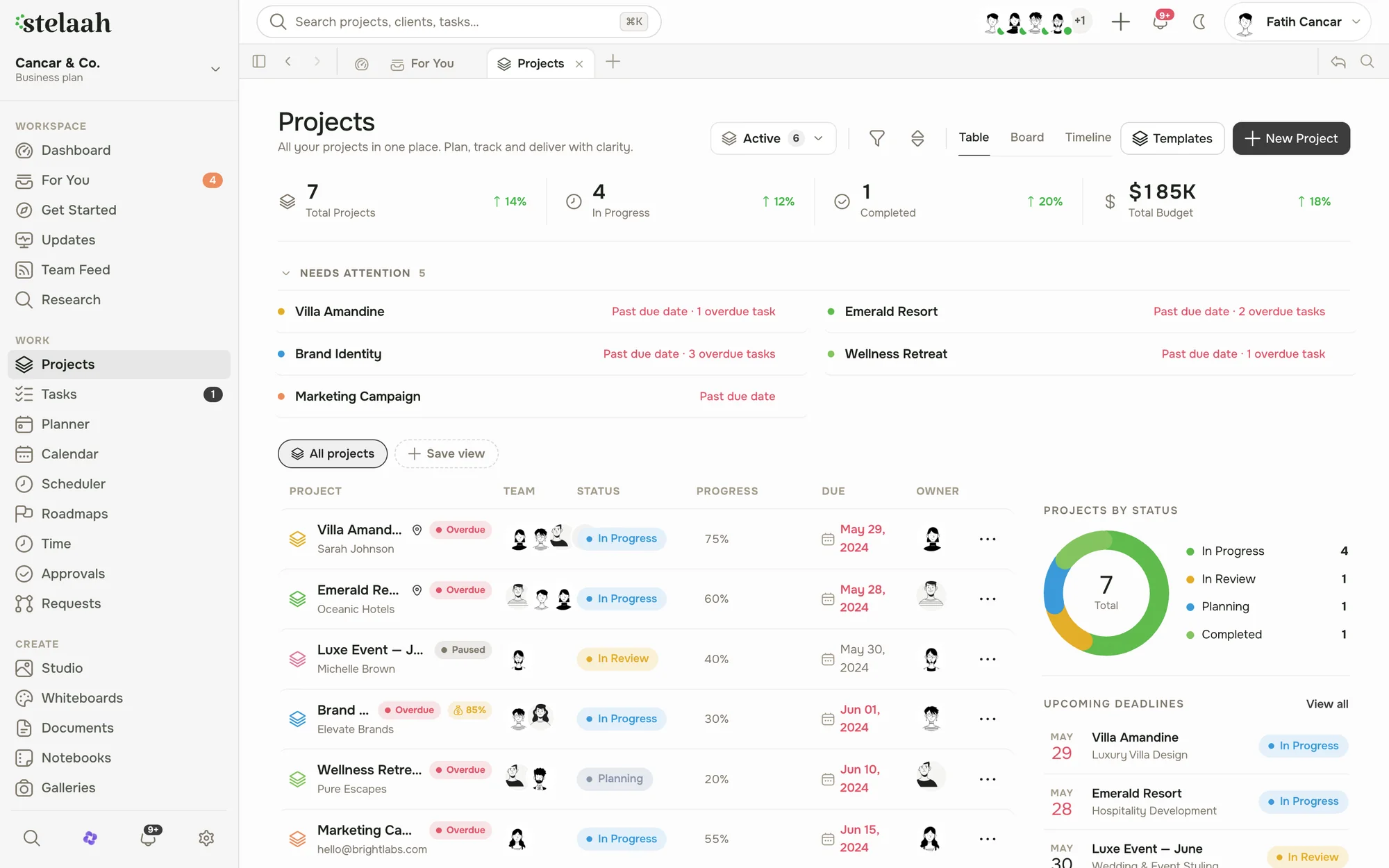
Use projects, tasks, and the client portal to give each engagement a shared home.
3. Deliver visibly, with decisions recorded
- Keep current files beside the project. Avoid making people guess which attachment is the working version.
- Request approval on the exact item that needs a decision. Include what the client is approving and what happens next.
- Record the decision and the date. Approval history helps teams move on confidently and resolve later questions.
- Surface blocked work early. A late approval or unanswered question should be visible before it becomes a missed deadline.
Stelaah approvals and client portal workflows are designed to keep the request, response, and surrounding project context together.
4. Bill from the work that actually happened
- Track time against the right project or service. Do this while the work is current, not at month end from memory.
- Check scope and budget before the project closes. A live view gives you a chance to have the conversation before overage becomes a surprise.
- Prepare the invoice from approved work. Reduce retyping and keep a clear connection between hours, deliverables, and the bill.
- Set a follow-up rhythm. Know who owns payment follow-up and when it happens.
Time tracking, reports, and invoices help connect delivery to billing.
5. Review, retain, and improve the next engagement
- Close with a complete client record. Keep the agreement, final files, key decisions, invoices, and project history together.
- Review what created friction. Look for missed handoffs, repeated client questions, scope changes, and delayed approvals.
- Turn the lesson into a better default. Update the next project template, intake question, or approval step instead of relying on memory.
- Keep the relationship warm. A client record with its real history makes the next conversation more useful.
Start with one live client. Do not rebuild every process at once. Pick an engagement that is active now, move its brief, tasks, approvals, and invoice into one connected view, then use what you learn to improve the next one.
Start freeWe build Stelaah, the connected workspace for client work. We write about running agencies and client teams with more context and less busywork.