A contract is only useful if you can find it and prove it was signed. Here is how to send, sign, and store agreements where the work already lives.
The problem with a contract in a folder
Most teams send a contract from one tool, collect the signature in another, and file the PDF in a drive nobody remembers the name of. When you need to check a clause or prove a term, the hunt begins. The agreement that protects you is the hardest thing to find.
- Signing lives apart from the project it governs.
- Signed copies get buried in shared drives.
- Renewals lapse because nothing watches the dates.
Sign and store on the project
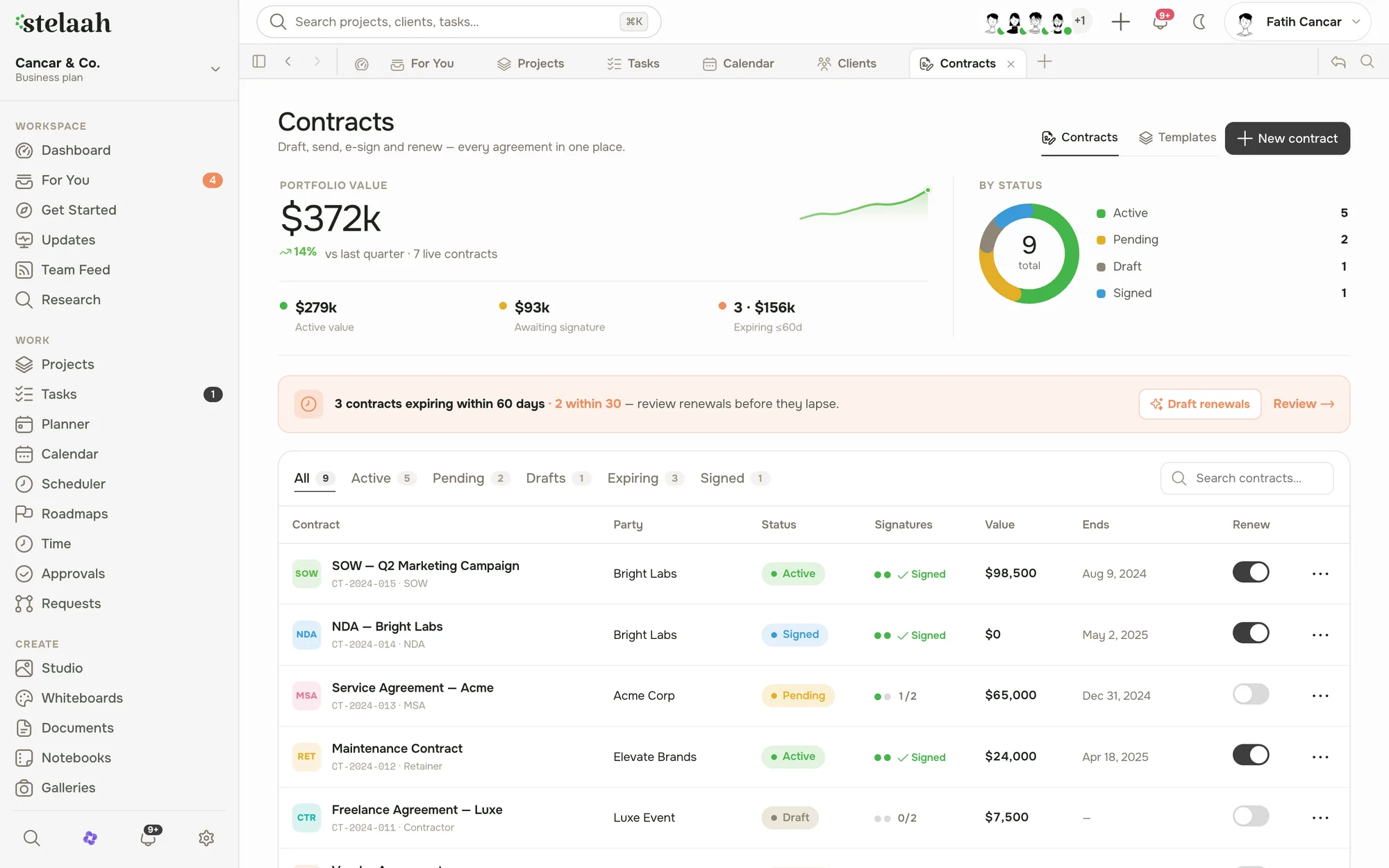
In Stelaah, the contract sits on the engagement it belongs to. You send it, the client signs, and the executed copy stays right there next to the tasks, files, and invoices. When you open the project, the agreement is one glance away, not one search away.
Renewals that watch themselves
Contracts have dates, and dates slip past a busy team. Stelaah keeps the terms visible and can flag a renewal before it lapses, so an expired agreement never surprises you mid project. Aria can draft the renewal note when the time comes.
A record you can stand behind
Every send, view, and signature is logged, so the agreement and its history live together. If a scope question turns tense, you have the signed terms and the timeline in one place, not a reconstructed email trail.
See it in the product: Contracts in Stelaah.
Run your client work in one place. Stelaah keeps projects, clients, contracts, and invoices together, with Aria for the busywork.
Start freeWe build Stelaah, the workspace for client work. We write about running teams, agencies, and venues without the busywork.